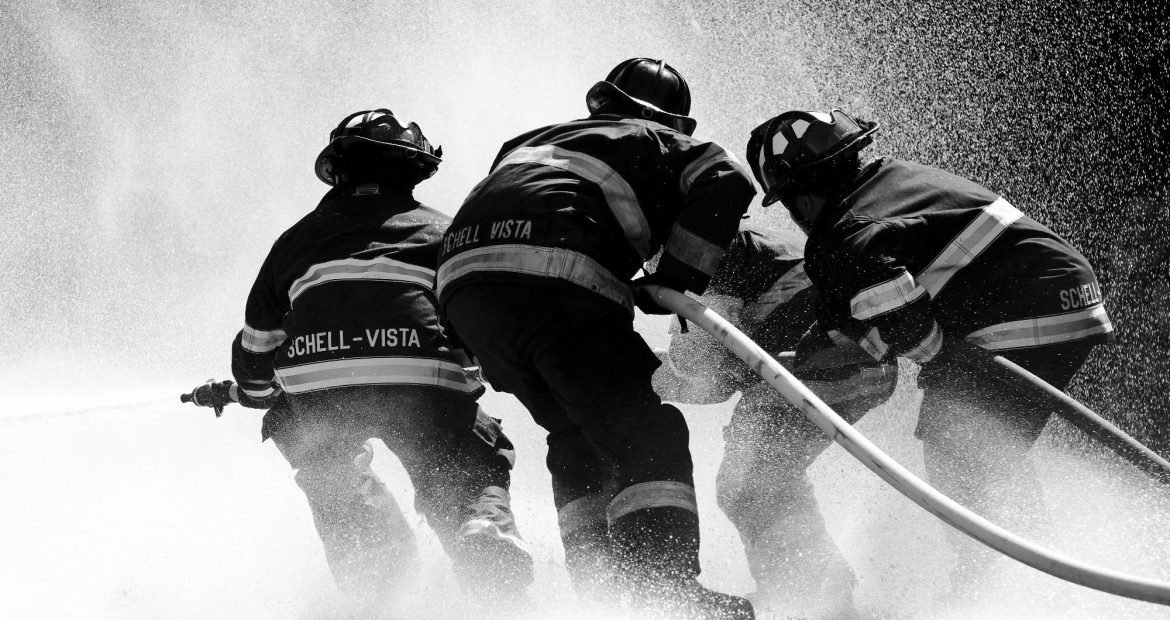
In 2026, California’s fire safety landscape is more stringent than ever. For property managers, construction firms, and industrial plant owners, “fire watch” has evolved from a simple precaution into a non-negotiable legal mandate. Whether you are managing a malfunctioning sprinkler system, a broken fire alarm, or a high-risk “hot work” project, hiring a fire watch security services provider is your primary defense against catastrophic fines and forced shutdowns by local fire departments.
As of January 1, 2026, legislative updates under SB 652 have completely overhauled training and certification for security personnel across the state. Today’s fire watch guards are more than just observers; they are highly trained responders acting as the on-site eyes for California’s Fire Marshals. Choosing a certified partner ensures your project remains open, your insurance stays valid, and your site is protected from the unpredictable threat of fire.
What are Fire Watch Security Services?
Fire watch security services involve the deployment of specialized personnel to conduct continuous, systematic surveillance of a property when fire protection systems are impaired or when high-risk activities increase the chance of ignition. Unlike general security patrols, fire watch is a singular, dedicated mission—the guard cannot be distracted by tasks like general access control or facility maintenance.
In 2026, certified fire watch security services for construction sites and commercial properties are required to:
- Proactive Hazard Identification: Constantly monitor for subtle signs of smoke, unusual heat, and potential ignition sources.
- Detailed Compliance Logging: Maintain a legally defensible fire watch log, recording patrols every 15–60 minutes as required by the Fire Marshal.
- Rapid Emergency Notification: Provide an immediate, direct link to 911 using approved communication devices to ensure zero-delay dispatch.
- Execute NFPA 241 Protocols: On construction sites, guards monitor “hot work” zones (welding, cutting, grinding) for at least 30–60 minutes after work has ceased to identify smoldering hotspots.
Why Fire Watch Security Matters for California in 2026
Operating in California requires navigating a complex web of NFPA (National Fire Protection Association) standards and local municipal codes. A professional service provides more than just “boots on the ground”; it provides a legal shield:
- The SB 652 Standard: As of 2026, all California security registrants must complete standardized “Power to Arrest” and “Appropriate Use of Force” training from a single certified provider. Using uncertified guards can lead to immediate site closure and heavy penalties.
- Verified Dispatch Priority: Many California cities now require human verification of an emergency before a fire truck is dispatched at high priority. A fire watch guard provides that vital, immediate verification.
- Insurance & Liability Protection: Most commercial insurance carriers will void a claim if a fire occurs while a system is down if a documented fire watch was not in place. By hiring a licensed Private Patrol Operator (PPO), you transfer the burden of specialized insurance and workers’ comp to the provider.
Facing a system failure or a Fire Marshal order? [Get a 2026 California Fire Watch Assessment] to determine your exact patrol frequency requirements today.
Step-by-Step: Implementing a Compliant Fire Watch
If your fire alarm or sprinkler system is out of commission for more than 4 hours in a 24-hour period, California law requires you to initiate a fire watch. Here is how to do it right:
1. Notify the Necessary Authorities
Immediately inform your local Fire District and your insurance provider of the impairment. Failing to report an outage can result in massive non-compliance fines.
2. Verify PPO and SB 652 Credentials
Only hire a licensed private security company. Verify their PPO license via the BSIS BreEZe portal and ensure their guards have completed the mandatory 2026 SB 652 training modules.
3. Establish a Regulated Patrol Rhythm
- High-Risk/Sleeping Occupancies (Hotels/Hospitals): Patrols every 15 minutes.
- Public Assemblies: Patrols every 15 minutes.
- Commercial & Construction Sites: Typically every 30 to 60 minutes.
4. Maintain a Real-Time Log
The fire watch log must remain on-site for immediate inspection. It must detail the address, guard name, exact time of each round, and specific findings (e.g., “All exits clear, no hazards detected”).
Best Practices & Expert Tips
- The “Sole Duty” Rule: The #1 reason for a failed inspection is a fire watch guard performing other tasks (like moving boxes or checking IDs). They must have one job: fire surveillance.
- Equipment Readiness: Every fire watch station must be equipped with a 10lb ABC fire extinguisher, a high-lumen flashlight, and a dedicated, reliable communication device.
- Mandatory Shift Overlaps: Require a 15-minute overlap between shifts so the outgoing guard can brief the incoming relief on any potential hotspots or equipment concerns.
Common Mistakes to Avoid
- The “Low-Bid” Trap: Hiring a firm quoting under $30/hr in 2026 is a significant red flag. This often indicates the guards are under-insured or haven’t received state-mandated SB 652 training.
- Generic Log Entries: Avoid vague phrases like “Checked building.” Logs must be site-specific: “Checked 3rd-floor electrical room, no heat detected, exit path clear.”
- Premature Termination: Fire watch must continue until the fire department provides written authorization to stop or until the system is officially repaired, tested, and certified.
FAQs (Short, Direct Answers)
When is fire watch legally required in California?
When fire protection systems (sprinklers, alarms, standpipes) are offline for more than 4 hours, or during any “hot work” on construction sites.
Do fire watch guards need a special license?
Yes. They must hold a California Guard Card, be employed by a licensed PPO, and be compliant with 2026 SB 652 training standards.
Can I use my own employees for fire watch?
Technically yes, but they must have no other duties during their shift and be fully trained. However, the massive liability risk usually makes professional services a more cost-effective choice.
Final Thoughts: Secure Your Assets with Nobel Guard
In 2026, the risk of fire and the price of non-compliance are higher than ever. By investing in professional fire watch services, you are doing more than just satisfying a Fire Marshal—you are securing your investment and protecting the lives within your facility.
Ready to secure your property with a 2026-compliant team?
Call Now: 619-599-2797 for emergency dispatch or a safety consultation.